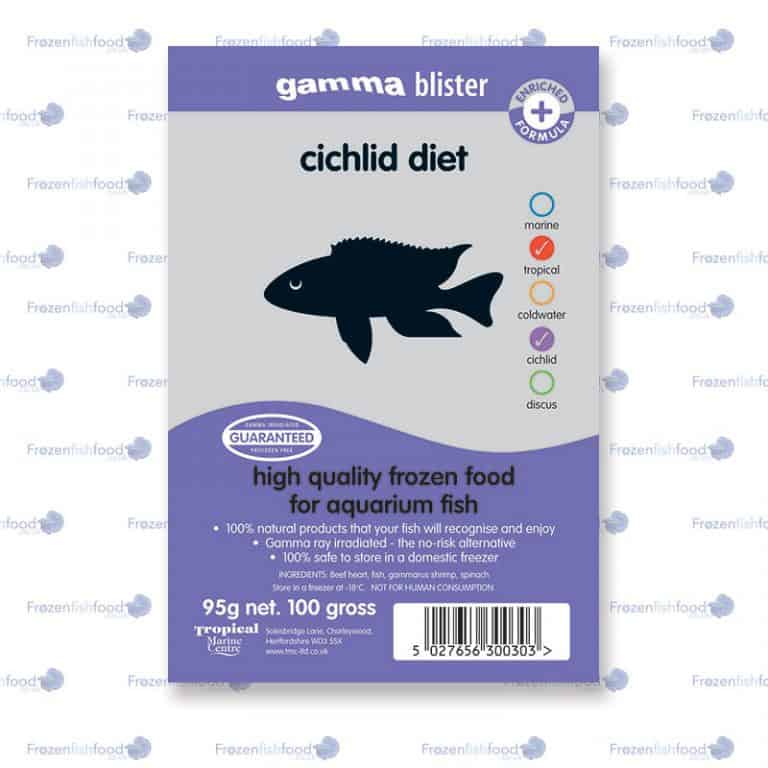
Frozen Cichlid food mixes are the best source of nutrients for your Cichlid species tropical fish.

Cichlids are a varied species of fish found in both fresh and saltwater settings worldwide. They are famous among aquarium hobbyists due to their vibrant colours and unique mannerisms, particularly the African Cichlids. Cichlid species have special dietary requirements, and it is critical to pick the correct fish food to keep them healthy and happy.
Cichlid food comes in a variety of forms, including flakes, pellets, and live or frozen choices.
Flakes are a popular food for cichlids. These are thin, dried food bits that may be crushed and fed to the fish. Flakes are simple and easy to store, but they may not be as nutritious as other foods.
Pellets are another common cichlid food. These are little, compacted food balls composed of a variety of ingredients. Pellets may be tailored to different life stages and dietary requirements, and they are an excellent source of balanced nutrition. They may not, however, be as enticing to certain cichlids as live or frozen choices.
Because they are more natural and give a broader range of nutrients, live and frozen feeds are frequently regarded the best choice for cichlid species. Brine shrimp, daphnia, and other tiny aquatic creatures may be available live. Bloodworms, brine shrimp, and other forms of shellfish may be available frozen. These feeds are more costly than flakes and pellets, and they must be stored properly to avoid spoiling.
Cichlids can be given a range of fresh meals, including vegetables, fruits, and tiny portions of cooked meat, in addition to these commercial alternatives. Cichlids require a varied diet and should not be overly reliant on one type of food to keep healthy.
A good cichlid food balanced diet will include a range of ingredients, including algae, bloodworms, crayfish, daphnia, mealworms, shrimp, tubifex and other crustaceans and plants.
Cichlid species have special dietary requirements, and it is critical to pick the proper fish food and feed them at the optimum frequency to keep them healthy and happy.
The frequency of feeding will be determined by the cichlids’ age and size, as well as the type of food supplied. Cichlids, in general, should be fed modest amounts of food many times every day. Juvenile cichlids may require more frequent feedings than adult cichlids due to their increased energy requirements and quick growth.
When feeding flakes or pellets, only provide a quantity that the cichlids can ingest in a few minutes. Overfeeding can result in excess waste and poor water quality, both of which are hazardous to fish. Live and frozen meals should also be provided in proper quantities, as they can deteriorate if left uneaten for an extended period of time.
Cichlids’ diets should be varied and a range of foods should be provided. This can assist ensure that they get all of the nutrients they require. Cichlids can be fed fresh fruits and vegetables, as well as modest portions of cooked meat, in addition to commercial diets.
Overall, it is critical to observe cichlid feeding behaviour and alter the frequency and amount of food as needed. Aquarium enthusiasts can help keep their fish healthy and happy by providing a balanced diet and feeding cichlids at the right frequency.
Cichlids are a family of fish that are native to the freshwaters of Africa, Central America, South America, and Asia. They are one of the most diverse groups of fish in the world, with over 2,000 species. Cichlids are known for their bright colors, large size, and aggressive behavior.
Cichlids are a large and diverse family of fish that can be found in both freshwater and saltwater habitats around the world. As such, their diets can vary greatly depending on the species, the environment, and the availability of food. Generally, cichlids are omnivorous, meaning they consume both plant and animal matter.
There are a variety of foods that are suitable for cichlids, and the best food will depend on the species of cichlid you have. Generally, cichlids are omnivorous, meaning they will eat both plant and animal matter.
A good balanced diet for cichlids should include a variety of high-quality foods.
Cichlid food typically contains a variety of natural ingredients, depending on the type of food and the species of cichlid. Generally, cichlid food is made up of a combination of proteins, carbohydrates, vitamins, minerals, and other nutrients.
Protein is an essential component of cichlid food, as it provides the fish with the amino acids they need to grow and develop.
Preparing cichlid food is a relatively straightforward process that can be done in a few simple steps.
First, you will need to gather the ingredients for the food. Depending on the type of cichlid you are feeding, you may need to purchase a variety of foods such as flakes, pellets, frozen foods, and live foods. Make sure to research the specific dietary needs of your cichlid before purchasing any food.
Feeding cichlids can be a tricky process, as they are a diverse group of fish that require different diets depending on their species. Generally, cichlids should be fed a balanced diet that includes both plant-based and animal-based foods.
For plant-based foods, you can provide your cichlids with a variety of vegetables and fruits, such as zucchini, spinach, peas, apples, and oranges.
Cichlid food is a type of fish food specifically designed for cichlids, a type of fish that is widely kept in aquariums. Cichlids are a diverse group of fish that come in a variety of shapes, sizes, and colours, and they have different dietary needs. Cichlid food is specially formulated to meet the nutritional needs of these fish, and it can provide a number of benefits to your aquarium.
The drawbacks of cichlid food are numerous and should be carefully considered before feeding your cichlids.
First, cichlid food is often high in fat and protein, which can lead to obesity in cichlids. Overfeeding cichlids can also cause them to become lethargic and can lead to health problems such as swim bladder disease.
If you’re looking to buy cichlid food, you have a few different options.
The first option is to buy it from your local pet store. Most pet stores will carry a variety of cichlid food, including flakes, pellets, and freeze-dried foods. This is a great option if you want to buy in small quantities and don’t need to buy a lot at once.
The second option is to buy it online.
Storing cichlid food is an important part of keeping your cichlids healthy and happy. The key to proper storage is to keep the food away from moisture, heat, and light.
The best way to store cichlid food is in an airtight container. This will help keep out moisture and keep the food fresh for longer. Plastic containers with lids are ideal for this purpose.
WhatsApp us
Thank you for your orders throughout 2025!
Orders can be taken at any time, shipping will commence on January 5th